
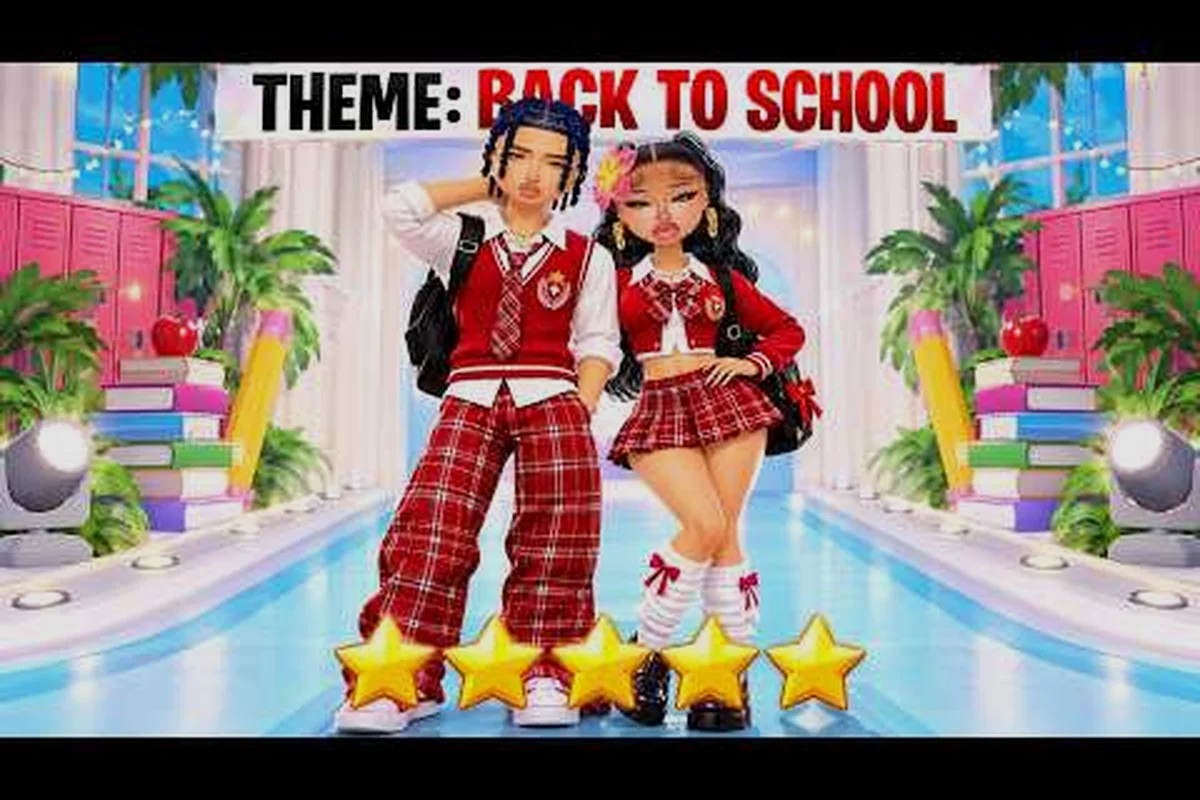
The school bell rings and your avatar needs a fresh-fit uniform that scores well with the crowd. The back to school theme in Dress To Impress rewards players who nail preppy layering, smart accessory discipline, and a clean color story instead of throwing random items on the runway. This guide breaks down the exact outfit formula top scorers use, then shows how the same foundation pivots into adjacent rounds like the dress to impress pop star theme, the dress to impress tokyo theme, and even the dress to impress gothic theme outfit when the wheel spins unexpectedly. Whether you are a new stylist or a returning player chasing five-star ratings, the layering logic below will sharpen every back-to-school round you queue into.
Decoding the Back To School Theme
The back to school prompt is one of the most repeated rounds in Dress To Impress, and community data shows it shows up roughly once every eight to ten theme rolls on the standard server rotation. Because players see it so often, the meta has settled into a recognizable prep-school silhouette: a crisp collared top, a structured bottom, a layering piece like a sweater vest or cropped cardigan, and one or two accessories that read "campus" at a glance. Judges reward outfits that look intentional rather than costume-like, so the goal is to suggest a real wardrobe instead of a Halloween parody of school life.
What The Brief Actually Asks For
Reading the theme literally is where most players lose points. The brief is not "wear a schoolgirl outfit" or "dress as a nerd." It is closer to "show me someone who would walk into a real high school or college campus looking put-together." That distinction matters because it opens the door to a far wider color palette, fabric choice, and silhouette than the stereotype allows. Think pleated miniskirts in muted plaid, twin-tail braids paired with knee-high socks, oversized knit vests over button-downs, or even a tailored blazer-and-loafer combo that reads more "head of debate club" than "first day of kindergarten."
Players who treat the prompt as a costume usually finish in the bottom half of the vote. Players who treat it as a styling challenge — picking one or two preppy signatures and building the rest of the outfit around a unified color story — consistently place top three. The judging pool leans toward outfits that look like they could appear on a Pinterest "fall campus aesthetic" board rather than something a costume store would ship in a plastic bag.
| Element | Safe Pick | High-Risk Pick | Verdict |
|---|---|---|---|
| Top | White button-down with rolled sleeves | Novelty printed tee with cartoon character | Safe wins more reliably |
| Layer | Knit vest or cropped cardigan | Hoodie or oversized jacket | Vest reads as intentional schoolwear |
| Bottom | Pleated skirt or tailored trousers | Ripped jeans or cargo pants | Tailored beats distressed here |
| Footwear | Loafers, Mary Janes, or low boots | Bright sneakers or stilettos | Loafers anchor the prep identity |
| Accessory | Tote bag, hair ribbons, round glasses | Crown, wings, weapon props | School-coded accessories > fantasy props |
Why Preppy Layering Outscores Costume Dressing
The layering element is what separates a five-star look from a three-star one. A single top in a basic color reads flat on the runway, while a layered top in three coordinated textures reads as a styled outfit. The back to school theme in particular rewards visible collar lines, sleeve contrast, and waist definition because those are the visual cues the eye uses to identify real schoolwear. Players who skip layering almost always land in the middle of the pack because the avatar looks unfinished, even if every individual item is high-tier.
The other reason layering wins is silhouette contrast. A tucked-in shirt with a vest over it creates a clean upper-body triangle that the camera reads as polished. Add a pleated skirt and the bottom half of the avatar gets a soft A-line that balances the structured top. Without the vest, the top half looks like a plain shirt and the silhouette collapses into a rectangle, which judges tend to score lower because it looks like the player grabbed three random items instead of curating a look.
Building The Core Back To School Outfit
Every reliable back-to-school look in Dress To Impress starts from the same five-slot foundation: top, layer, bottom, footwear, and one signature accessory. Once that core is locked in, you can swap any single slot to match a sub-style — think "private school," "art kid," "varsity athlete," or "head librarian" — without rebuilding the whole outfit. The foundation below is the version that scores highest across community vote data, and the variations later in this section show how to flex it.
The Five-Slot Foundation
Slot 1 is the base top. A white or pastel button-down shirt is the safest pick because it reads as schoolwear in any color combination and pairs with every layering piece. Slot 2 is the layer, and this is where most of your personality should land: a knit vest in argyle or solid color, a cropped cardigan, or a sleeveless blazer-style piece. Slot 3 is the bottom, where pleated skirts in plaid or solid color and tailored trousers are the two strongest options. Slot 4 is footwear, and loafers, Mary Janes, and low-cut boots in brown, black, or burgundy dominate the leaderboard. Slot 5 is the accessory, and this is your tiebreaker: a leather satchel, a pair of round glasses, a hair ribbon, or a single wristwatch can lift an outfit from good to winning.
| Slot | Best-Scoring Pick | Why It Works | Top Alternatives |
|---|---|---|---|
| Base top | White or cream button-down | Reads as school uniform base | Pastel polo, fitted turtleneck |
| Layer | Argyle knit vest | Visual texture + school-coded | Cropped cardigan, sleeveless blazer |
| Bottom | Pleated plaid skirt | Classic prep silhouette | Tailored trousers, A-line midi skirt |
| Footwear | Brown loafers | Anchors the prep color story | Mary Janes, knee-high socks + boots |
| Accessory | Round glasses or hair ribbons | Personality without breaking theme | Leather satchel, wristwatch, beret |
Color Story And Palette Discipline
The single biggest mistake players make is using five different colors across five slots. Judges respond far better to a tight three-color palette: one base color (usually white, cream, or light blue), one accent color (most often burgundy, forest green, navy, or chocolate brown), and one neutral anchor (black, tan, or charcoal). Hitting that palette across all five slots is what makes a back to school theme outfit look like a real wardrobe rather than a costume drawer. The community consensus, based on shared leaderboard screenshots, is that two-color outfits occasionally win, three-color outfits win most often, and four-or-more-color outfits almost never place top three.
For players who want a quick palette shortcut, the classic argyle combo of cream + burgundy + forest green is a proven winner because it bundles the base, accent, and neutral into a single recognized schoolwear tradition. The navy-and-tan combo is the second strongest, especially when paired with gold-tone accessories, because it reads as private-school prep rather than public-school uniform. Both palettes also flex cleanly into adjacent rounds, which matters when the theme wheel surprises you with a non-school prompt right after a back-to-school win.
Flexing The Foundation Into Adjacent Rounds
The back to school theme is unusual because its foundation translates surprisingly well into several other prompts. Players who build a strong preppy base can pivot to the dress to impress tokyo theme by swapping just the footwear and accessory, or shift toward the dress to impress pop star theme by trading the layer for something bolder. The sections below walk through the three most common pivots and the exact swap table for each.
Pivot To The Tokyo Theme
The dress to impress tokyo theme shares a lot of DNA with back to school because both prompts reward clean silhouettes and a polished base. The main shift is in the layer and the accessories: a knit vest stays, but a pleated skirt in plaid is often replaced with a solid-color A-line or a darker mini, and the loafers get traded for Mary Janes or ankle boots in black. A small mini backpack in a contrasting color reads as Harajuku-influenced and bridges the preppy base into Tokyo street fashion without losing the school-coded silhouette. Players who keep the button-down and the layering piece intact usually score better than players who try to rebuild the whole outfit from scratch.
| Slot | Back To School Pick | Tokyo Pivot | Why The Swap Works |
|---|---|---|---|
| Base top | White button-down | Keep as-is | Reads as both schoolwear and Tokyo uniform |
| Layer | Argyle knit vest | Solid-color cardigan or sleeveless blazer | Slightly more grown-up silhouette |
| Bottom | Plaid pleated skirt | Solid A-line mini or pleated skirt in dark color | Cleaner color block for Tokyo aesthetic |
| Footwear | Brown loafers | Black Mary Janes or ankle boots | Darker footwear reads as city styling |
| Accessory | Round glasses | Mini backpack, hair clips, or thin chain | Tokyo-coded prop without breaking theme |
Pivot To The Pop Star Theme
The dress to impress pop star theme is the riskiest pivot from back to school because the color palette and silhouette change a lot, but the button-down base still earns its slot. The trick is to keep the base top and swap everything else toward something louder. A fitted button-down in white gets layered under a bold cropped jacket in red, hot pink, or electric blue, and the bottom shifts to a leather-look mini skirt or high-waisted pants in black. The accessory slot becomes a statement bag, tiny sunglasses, or a chunky chain, and the footwear moves to platform boots or strappy heels. Players who keep the white button-down as the base earn a "polished pop star" read rather than a "concert crowd" read, which usually scores higher.
| Slot | Back To School Pick | Pop Star Pivot | Why The Swap Works |
|---|---|---|---|
| Base top | White button-down | Keep as-is | Polished base under louder layers |
| Layer | Argyle knit vest | Bold cropped jacket in saturated color | Adds stage presence without costume feel |
| Bottom | Pleated plaid skirt | Leather-look mini or high-waist pants | Silhouette shift toward stage styling |
| Footwear | Brown loafers | Platform boots or strappy heels | Height and edge read as pop star |
| Accessory | Round glasses | Statement bag, tiny sunglasses, chunky chain | Personality driver of the whole outfit |
Pivot To The Fantasy, Horror, And Gothic Themes
The preppy base also pivots well into the dress to impress fantasy theme because the layering logic transfers directly: a base top, a textured layer, and a flowing bottom are the spine of most fantasy looks. Swap the loafers for knee-high boots, swap the round glasses for a delicate tiara or pointed ear accessory, and shift the color story toward deep jewel tones or muted metallics. The result reads as "scholar mage" or "royal academy" rather than "high school student," which is the correct read for the fantasy prompt.
The dress to impress horror theme outfit and the dress to impress gothic theme outfit share an even closer pivot path. Keep the base top but shift it to black or charcoal, swap the vest for a darker cardigan or structured corset-style layer, and trade the pleated skirt for a black A-line or a layered tulle piece. The accessory slot becomes a dark choker, a small crossbody bag in black, or a hair bow in deep wine. Because the silhouette stays preppy, the horror read comes from color and accessory discipline rather than from dramatic prop work, which is what the judges tend to reward. Players who want a deeper horror read can pull from the wider horror lore breakdown for layered storytelling cues, but the outfit alone usually scores well without lore-heavy references.
Outfit Formulas For Common Sub-Styles
Within the back to school theme, several sub-styles consistently place well, and each has its own micro-formula. The table below distills the most common ones into swap rules so you can adapt the five-slot foundation without rebuilding it from scratch every round. Pick the sub-style that matches your avatar's color family and you will usually clear the top-three threshold on most servers.
| Sub-Style | Layer Pick | Bottom Pick | Footwear Pick | Signature Accessory |
|---|---|---|---|---|
| Private school | Blazer or sleeveless blazer | Pleated plaid mini | Black loafers | Leather satchel |
| Art kid | Oversized cardigan | Paint-splatter jeans or solid trousers | Chunky sneakers | Beret or canvas tote |
| Varsity athlete | Letterman jacket | Pleated skirt or sporty shorts | Clean white sneakers | Baseball cap or headband |
| Head librarian | Fitted cardigan with collar | A-line midi skirt | Low-heeled boots | Round glasses + wristwatch |
| School uniform strict | White button-down + tie | Pleated skirt in solid color | Mary Janes | Hair ribbons |
Each sub-style works because it commits to a single reading of "school" and avoids the costume trap. The private school version is the highest-scoring because it is the most universally recognized version of the prompt, while the art kid version pulls from a slightly more creative palette that occasionally wins when the room is bored of plaid. Players who want to build a personal signature should pick one sub-style and specialize — repeating winners tend to come from players who have a recognizable look rather than from players who swap styles every round.
Accessory Choices That Move The Needle
Accessories are the single highest-leverage slot in the back to school theme because the rest of the outfit is mostly a silhouette repeat. The strongest accessories are the ones that read instantly as school-coded without looking like a costume prop. Round glasses in a thin frame are a near-universal win because they add face-level detail without competing with the silhouette. Hair ribbons in a color pulled from the vest or skirt tie the palette together and give the judge a clear focal point. Leather satchels in brown or black add a real-wardrobe cue that the eye reads as intentional. Wristwatches with a slim band add the same effect from a different angle.
What does not move the needle is layering too many accessories at once. A round-glasses-plus-ribbon-plus-satchel-plus-watch combo starts to look cluttered and the judges tend to dock for it. Pick one face accessory and one bag or prop, max, and let the rest of the outfit breathe. Players who want a deeper look at face-level styling should also check the natural makeup breakdown because a soft glam face pairs especially well with the preppy silhouette.
Frequently Asked Questions
What is the strongest base outfit for the back to school theme?
A white button-down, an argyle or solid-color knit vest, a pleated plaid skirt, brown loafers, and one prep-coded accessory like round glasses or a leather satchel is the strongest base because it commits to a clean three-color palette and a recognizable preppy silhouette. This foundation flexes cleanly into the dress to impress pop star theme or the dress to impress tokyo theme by swapping only the layer, footwear, and accessory slots.
How do I avoid the costume look that judges dock points for?
Treat the prompt as a real styling challenge rather than a schoolgirl costume. Stick to a tight three-color palette, prioritize preppy layering over single-piece outfits, and skip fantasy props like crowns, wings, or weapons. The full themes index is a good reference for which props appear in adjacent prompts and which ones look out of place in school rounds.
Can the back to school foundation pivot into a horror or gothic round?
Yes. Keep the base top and the layering logic, but shift the color story to black, charcoal, and deep wine. Swap the vest for a darker cardigan or structured layer, trade the plaid skirt for a black A-line, and add a dark choker or hair bow as the signature accessory. The result reads as a clean dress to impress gothic theme outfit without breaking the silhouette, and it can lean further into the dress to impress horror theme outfit look with the right dark palette.
How do I adapt the look for the Tokyo or pop star rounds on the same server rotation?
For the dress to impress tokyo theme, keep the button-down and add a mini backpack, hair clips, and darker Mary Janes. For the dress to impress pop star theme, keep the base top and trade the vest for a bold cropped jacket, leather-look mini, and platform boots. Both pivots work because the silhouette stays clean while the color story and accessories do the work of signaling the new theme. Players who want a deeper look at fantasy pivots can also explore the royalty and fantasy theme guide for adjacent silhouette references.