
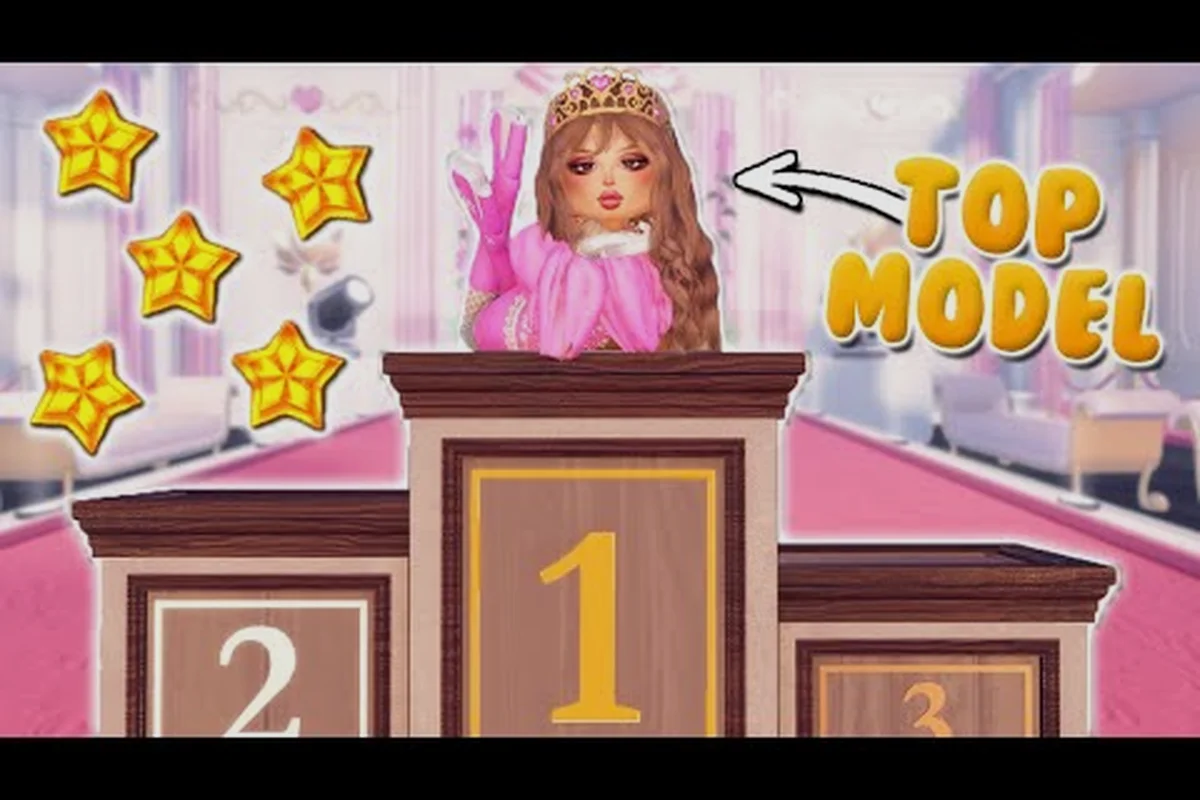
Votes are the lifeblood of Dress To Impress, because every star that pushes you up the rank ladder — from New Model toward Top Model — is earned by winning over the audience during the runway phase. Understanding how to get votes in this Roblox phenomenon means mastering theme interpretation, color cohesion, makeup synergy, and podium presence, all within the tight five-minute dressing window. The Dress To Impress on Roblox official page confirms that players vote for their favorite outfits and pose on the runway, so the competition is both about what you wear and how you sell it.
The Voting System: How Votes Become Stars
Every Dress To Impress round ends with a public vote among the participating players, and the result directly feeds into your star count — the same currency used to climb through ten named ranks. According to community tracking on the r/DressToImpressRoblox subreddit, each player can hand out up to five stars per round, but the distribution is split across all contestants, so concentrating love on the strongest look is the real strategy. The game's star economy is the gateway to higher-tier servers and cosmetic unlocks, which is why maximizing votes early matters so much.
Milestone Star Totals From Runway Queen Up
Game Rant's breakdown of the rank system maps each milestone to a specific star total, and the climb gets steeper the higher you aim — notice how the jumps from Runway Queen (3,000) to Trend-Setter (6,000) to Runway Diva (15,000) effectively double or triple each previous threshold, meaning a single lost theme vote at those tiers costs you exponentially more runway time than a missed vote during the Fashionista grind.
| Rank Title | Stars Required | Server Access |
|---|---|---|
| New Model | 0–49 | Public servers |
| Rising Star | 50 | Public servers |
| Aspiring Model | 200 | Public servers |
| Fashionista | 600 | Public servers |
| Glamourista | 1,000 | Public servers |
| Fashion Maven | 1,500 | Public servers |
| Runway Queen | 3,000 | Public servers |
| Trend-Setter | 6,000 | Public servers |
| Runway Diva | 15,000 | Public servers |
| Top Model | 25,000 | All servers incl. Pro |
Reaching 2,000 stars unlocks Pro Exclusive servers, which house a more competitive crowd and cleaner voting — so even mid-tier players benefit from grinding votes early. The VIP pass, priced at 299 Robux monthly or 799 Robux lifetime, also speeds up earning by stacking bonuses, but votes remain the backbone of progression regardless of subscription status.
How a Single Round Translates Into Votes
Each round follows a predictable rhythm that starts the moment the theme is announced. Players have roughly five minutes to assemble an outfit, the runway walk begins, and the vote follows immediately after. Community-tested observations confirm the most common vote split:
| Placement | Typical Vote Share | Notes |
|---|---|---|
| 1st place | 35–50% of cast votes | Dominant theme match, often with bonus makeup cohesion |
| 2nd place | 20–30% | Strong interpretation with minor cohesion gaps |
| 3rd place | 10–20% | Decent styling, missed one theme cue |
| 4th+ place | Under 10% each | Off-theme or visually cluttered |
A clean theme read usually beats a technically complex outfit because the voting window closes within seconds of the runway ending, and a single dominant color or silhouette cue reads faster than three layered toggles competing for attention. Players who treat the theme as a single keyword (e.g., "Pirate" = tricorn, coat, boots) and commit fully tend to land in the 35–50% tier, while players who over-style with off-theme accessories drift into the 4th+ bracket. Cohesion and recognizability win more votes than layering every catalog toggle.
Theme Interpretation: Reading the Brief Like a Judge
A huge slice of how to get votes comes down to reading the theme correctly, because players vote for outfits that scream the topic without needing a label. The five-minute clock punishes overthinking, so a fast mental framework beats endless toggle clicking. Skim the theme word, picture two or three cultural touchstones, then commit to the strongest one.
The "Head-to-Toe" Rule
Community veterans consistently advise that every visible slot — hair, top, bottom, shoes, accessory, and makeup — should reinforce the theme word. A single off-theme piece dilutes the read and costs votes from players who are scanning the runway quickly. The table below illustrates how a single theme can branch into different cohesive reads:
| Theme Word | High-Vote Read 1 | High-Vote Read 2 | Common Mistake |
|---|---|---|---|
| Cowgirl | Denim, boots, hat, western belt | Fringe jacket, bandana, sun-tan makeup | Mixing in formal heels |
| CEO | Blazer, briefcase, slicked hair, glasses | Power suit, watch, neutral makeup | Adding playful patterns |
| Ballerina | Tutu, bun, ballet flats, soft pink tones | Leotard, tights, ribbon choker | Throwing in streetwear kicks |
| Zombie | Torn dress, pale makeup, dark circles | Ripped suit, green tint, exposed bones | Keeping a clean glam look |
A full head-to-toe read typically out-votes a partial theme, even if the individual pieces are cheaper, because the audience reads it instantly and rewards cohesion over cost during the dress to impress runway tips phase. When voters only have a few seconds per look, a unified silhouette communicates the theme word in one glance, whereas a partial fit forces them to mentally assemble the concept — and most skip to the next contestant. Tie this back to the High-Vote columns in the table above: every winning read listed fills all six visible slots, while every "Common Mistake" leaks the theme through a single mismatched element. In practice, that means prioritizing cheap but on-theme accessories (a $1 bandana or a thrifted blazer) over a single expensive off-theme splurge piece, because vote conversion in dress to impress theme voting is driven by completeness, not price tag.
Makeup and Face Framing
Makeup is one of the most underrated vote magnets, because the camera lingers on the face during poses. Players who match skin tone, blush, and lip color to their outfit theme consistently land in the top three according to community reports. A clown theme with neutral makeup, for example, loses points even if the costume is perfect, because the face breaks the illusion.
Runway Tips: Selling the Look From Walk to Pose
Once the dressing timer ends, the runway phase is where votes are actually locked in. Players can pose at multiple podium markers, change expressions, and time their walk to the background music — every small choice influences how memorable the outfit feels. The Dress To Impress voting system is essentially a popularity contest, so presentation is half the battle. For players who want to refine the walk itself, the runway tips guide covers camera controls and pose timing in detail.
Pose Selection and Timing
Each podium allows a different pose, and choosing the right one for the outfit's silhouette is a vote multiplier. A flowing gown reads better with an arm-out twirl, while a sharp tailored suit benefits from a confident hand-on-hip stance. Players who cycle through poses at each marker usually get more screen time from viewers, and that visibility translates directly into votes.
Camera Angles and Walking Speed
Camera angle is a subtle but powerful vote driver, because a poor angle can hide the best parts of an outfit. Tilting the camera to show the full silhouette — including shoes and accessories — gives voters a complete picture rather than a cropped headshot. Walking slowly enough to let voters register each piece is equally important, because a rushed run buries details that could have earned extra stars. Learning the camera and pose controls is a quick win for anyone serious about climbing the rank table.
Building a Cohesive Look: Layers, Patterns, and Color
Beyond theme and runway skill, the actual construction of the outfit matters because voters compare looks side by side in real time. A cohesive color palette, clean layering, and a single statement accessory tend to out-vote a maximalist stack of mismatched pieces. The community has converged on a few reliable rules that consistently show up in high-vote screenshots.
Color Palette Discipline
Limiting the look to two or three main colors is the simplest vote hack in the game, because the eye reads the outfit as a single unit rather than a parts list. Patterns should align in color family, and metals (gold, silver, rose) should stay consistent across jewelry, shoes, and hair accessories. The table below shows how a constrained palette compares to a chaotic one in typical community voting:
| Approach | Color Count | Typical Vote Result |
|---|---|---|
| Cohesive palette | 2–3 dominant colors | Top 3 placement |
| Mixed metals | Gold + silver + neon | Mid-pack |
| Single statement color | 1 color, all slots | Often 1st place |
| Random layering | 5+ unrelated colors | Bottom half |
A single statement color — such as an all-red or all-white look — is one of the easiest paths to high votes for new players who haven't built a deep wardrobe yet, and the runway voting math reflects exactly why: when every slot from hair to shoes reads as one hue, judges stop mentally itemizing the outfit and instead score the silhouette as a cohesive theme, which is the same principle that pushes cohesive palette entries into the Top 3 of the comparison table. In practice this means a starter player owning only a few basic pieces in one color family can outperform a veteran mixing five unrelated items, because the theme voting rubric weights color unity heavily.
Layering Without Clutter
Layering adds depth, but only when each layer serves a purpose. A jacket over a top, a belt over the jacket, and a sash over the belt is too many breaks in the silhouette and tends to read as noise. Two strong layers usually beat four average ones, and the silhouette should remain readable from the side and back as well as the front.
Podium Strategy: Reading the Room and Adapting
The podium phase is also a social read, because voters reward outfits that feel intentional rather than random. Watching what other players put together before you commit to a final accessory swap can give you an edge — if everyone is doing a literal take, an abstract interpretation stands out, and if everyone is going abstract, a literal one wins. The voting mechanics guide goes deeper into how the duos and freeplay modes change this dynamic, but the core principle is the same: differentiation earns votes.
Server Type and Competition Level
Server type dramatically affects vote difficulty, because Pro Exclusive servers attract experienced players with deep wardrobes and sharp theme reads. New players who want consistent top-three finishes should stay in public servers until they hit the 2,000-star Pro threshold, then warm up in Pro lobbies before pushing for Top Model ranks.
Voting Etiquette and Fair Play
Fair voting is a community norm, with most players splitting their five stars across the strongest looks rather than dumping them on a friend. Abusing the vote system by giving all five stars to one player — even in duos — tends to backfire because other players notice and vote less generously in return. Playing fair builds reputation, and a solid reputation translates into more votes from strangers over time.
Frequently Asked Questions
How many votes do you need to rank up in Dress To Impress?
Rank progression depends on total stars, not raw vote count, because each vote contributes a fraction of a star. Reaching Rising Star at 50 stars typically takes around three to five strong top-three finishes, while Top Model at 25,000 stars requires hundreds of consistent wins. The exact vote-to-star ratio shifts with each round, so the rank table on the Game Rant progression guide is the most reliable reference for milestone planning.
What is the best theme strategy to get more votes in Dress To Impress?
Pick the strongest cultural touchstone the theme word suggests, then commit to it across every slot including makeup. A clear, head-to-toe read almost always out-votes a half-committed look, and limiting your palette to two or three colors is the easiest way to make the theme read instantly. Avoid mixing metals or adding accessories that break the silhouette, because clutter costs votes from fast-scanning players.
Do runway poses actually affect vote totals?
Yes, because the camera lingers on each pose and voters see the outfit from multiple angles during the walk. Choosing a pose that highlights the silhouette — such as an arm-out twirl for a gown or a hand-on-hip stance for a suit — gives voters more reasons to award stars. Cycling through poses at each podium marker also increases screen time, which directly correlates with higher vote shares according to community testing.
How do I unlock Pro Exclusive servers for cleaner voting?
Pro servers unlock automatically once you reach 2,000 stars, which is achievable within a few focused sessions of strong top-three finishes. The VIP pass, available for 299 Robux monthly or 799 Robux lifetime, stacks bonuses that speed up the grind, but the star threshold itself is the same for all players. Once inside Pro lobbies, expect sharper competition but also more consistent voting behavior.
Can I practice runway timing without spending Robux?
Absolutely, because the Dress To Impress beginner guide covers freeplay mode where you can walk the runway solo and test camera angles. Freeplay also lets you experiment with makeup combos and palette discipline without any rank pressure, making it the best training ground for new players who want to refine their vote-winning formula before jumping into competitive rounds.